Siphon Coffee: Japan's Theatrical Brew, Explained
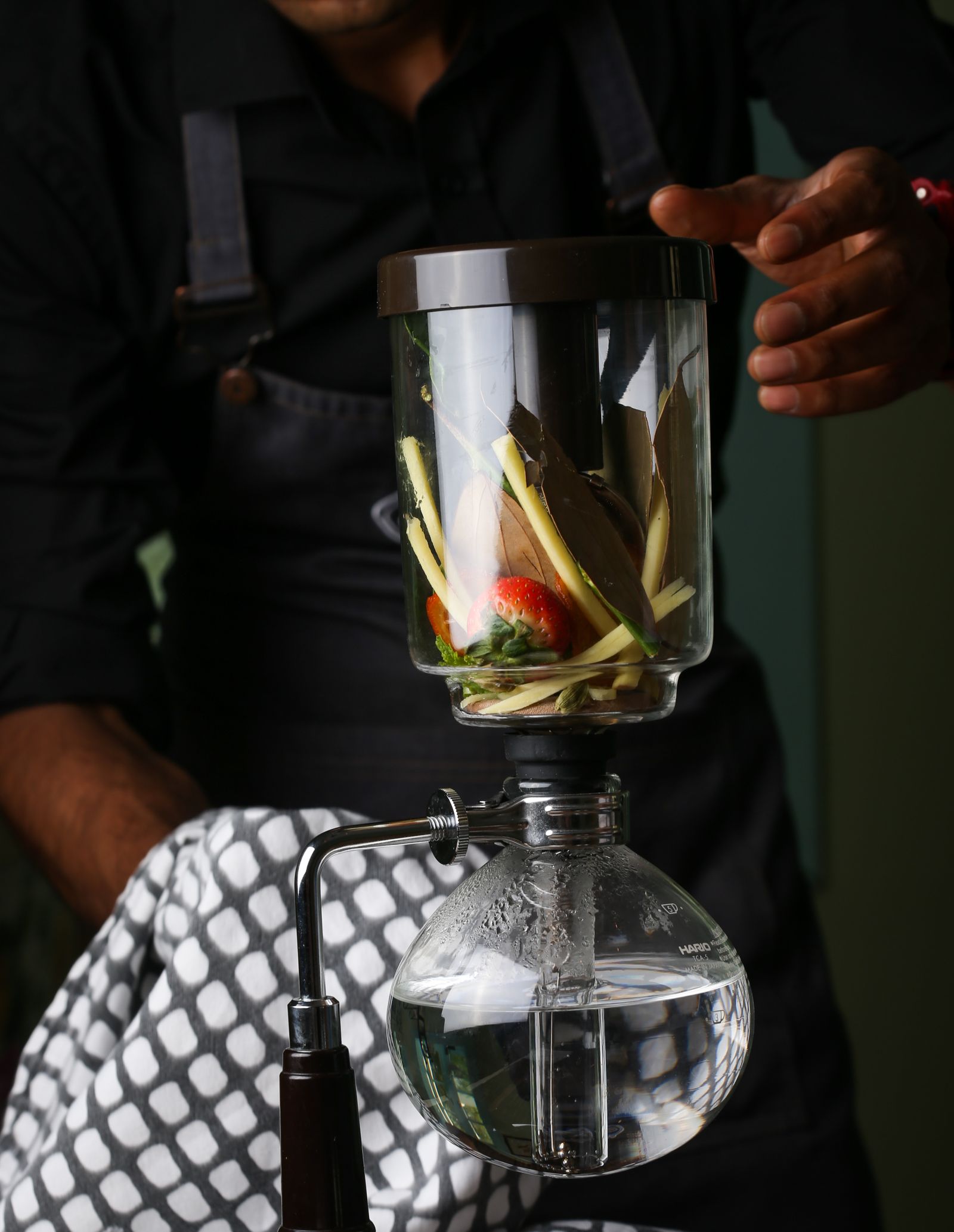
Picture a coffee bar where the drink doesn't drip or pour so much as perform: water climbs a glass tube, bubbles up into a second glass globe, mingles with the grounds over an open flame, then gets pulled back down through a filter as if by magic. That is siphon coffee. It looks like a chemistry demonstration, and in a sense it is — but the people who turned it from a Victorian parlor curiosity into a refined, one-cup-at-a-time craft weren't Europeans or Americans. They were Japanese café masters, who kept the method alive for decades after most of the world had moved on.
A quick definition before we go further. Siphon coffee is also called vacuum coffee or vacuum pot coffee, and in British English it's spelled "syphon." They all mean the same thing: a brewing method that uses vapor pressure and vacuum to move water through the grounds instead of gravity or a pump.
In this guide, we'll walk through how a siphon actually works, what it tastes like, why Japan is the reason the method survived at all, how to brew a cup at home, and — just as important — how to do it safely and keep the gear clean. If you're newer to Japanese brewing overall, it's worth starting with our complete guide to Japanese pour over coffee; this article stays focused on the siphon specifically, so we'll point you back there whenever the broader pour-over world comes up.
What is siphon coffee (a.k.a. vacuum coffee)?
A siphon brews with two glass chambers. The lower flask holds the water; the upper chamber (sometimes called the bowl) holds the coffee. You heat the water in the lower flask over a burner, and as it approaches a boil, vapor pressure pushes the water up a tube into the upper chamber, where it steeps with the grounds — a full-immersion soak, much like a French press. When you cut the heat, the lower flask cools and the resulting vacuum draws the brewed coffee back down through a filter, leaving the grounds behind. That final downward pull through the filter is what gives siphon coffee its clarity.
The names can be confusing, so to be clear: siphon = syphon = vacuum pot = vac pot. They're the same device under different spellings and nicknames. In the United States, "siphon" is the spelling you'll see most often.
As for where it came from: the design was invented in 19th-century Europe as something close to a laboratory apparatus, and it found a home in parlors and higher-end cafés before drip machines pushed it out of the Western mainstream. But it didn't disappear everywhere — it survived, and thrived, in Japan. We'll come back to that story, because it's the heart of why this brew is worth knowing.
How a siphon actually works (the three stages)
If you only remember one thing about the mechanics, make it this: a siphon brew happens in three stages.
- Rise. You heat the water in the lower flask. As the trapped air and vapor above the water warm up, the pressure inside the sealed flask climbs and forces the water up through the tube into the upper chamber.
- Immersion. Up top, the water and grounds mix and steep together for a set time. This is full immersion — the coffee stays fully submerged, the way it is in a French press, rather than water passing through a bed once.
- Vacuum drawdown. When you remove or lower the heat, the lower flask cools, the vapor inside condenses back to liquid, and the sudden drop in pressure creates a partial vacuum that pulls the brewed liquid back down through the filter and into the flask. That filtration step on the way down is what produces the clean cup.
Here's why the mechanics matter for flavor: the siphon gives you both the body of immersion and the clarity of filtration, in the same brew. Most methods lean one way or the other. A siphon does both at once — which brings us to how it tastes.
What siphon coffee tastes like (and how it compares)
Siphon coffee tends to land in an unusual place: clean and clear, yet full-bodied and round. Because the grounds steep fully, you get weight and sweetness; because the coffee is filtered on the way down, that weight doesn't come with grit or muddiness. Aromatics often feel layered and pronounced, acidity tends to read as gentle, and sweetness sits forward. It's the combination — immersion depth plus filtered clarity — that people find hard to get any other way. We'd stop short of overselling it, but that dual character is the real draw.
Siphon vs. pour over
The short version: pour over — gravity pulling water through a paper cone — tends to be lighter, cleaner, and brighter, with acidity and floral notes standing out. A siphon — full immersion plus vacuum filtration — tends to be rounder, heavier, and sweeter. Part of the difference is that a siphon holds a high, stable brewing temperature, and part of it is the full-immersion contact.
We won't get into pour-over ratios and technique here — that's its own craft. If the bright, paper-filtered clarity is what you're after, our Japanese pour over guide covers it in full.
As for beans: lighter to medium roasts, where aromatics and complexity are the point, tend to show their layers beautifully in a siphon, while darker roasts come out round and smooth. Treat that as a starting point rather than a rule — a lot comes down to your own taste.
Why Japan kept the siphon alive
This is the part of the story most guides skip, and it's the reason the siphon still matters.
The siphon was born in Europe, but as drip machines spread through the 20th century, the method quietly vanished from Western homes and cafés. Japan went the other way. In the kissaten — the classic Japanese coffee houses that spread through the Shōwa era, known for careful, unhurried, made-to-order coffee — the siphon was never abandoned. Baristas brewed it one cup at a time and treated it as a craft with technique and ceremony, refining it for generations.
From European lab to Japanese counter
The usual account is that around 1920, American-made Silex and British-made Cona siphons were imported into Japan and took hold there, just as coffee culture was gaining ground. Domestic manufacturing followed: Hario, which started in 1921 as a maker of heat-resistant laboratory glassware, developed its signature heatproof glass in the late 1940s and used it for its first coffee product — the coffee siphon. Other Japanese makers such as KONO kept the supply chain and know-how alive at home even as the method faded elsewhere. Treat the earliest dates and names as the commonly repeated version rather than settled fact.
The siphonist and the championship
The craft became specialized enough that there's a dedicated word for the person doing it: a siphonist — someone skilled at brewing on a siphon. It's competitive, too. The Japan Siphonist Championship has run since 2003, held by the Specialty Coffee Association of Japan, and a World Siphonist Championship followed in 2009, with Hario as a sponsor — widely described as the effective world championship for the method. In other words, the benchmark for siphon technique was set in Japan.
So a siphon isn't just a device. It's a way of showing time and craft — the theater of the brew. That's why ordering one at a café feels like an event, and why making one at home is worth the trouble.
The kissaten is where this ritual lives. If you're curious about the coffee houses that kept it going, here's what a kissaten actually is.
What you'll need
You don't need much, but each piece matters.
- A siphon coffee maker (two-chamber type). Glass, usually with a stand. In Japan, Hario's "Technica" and "Next" models and KONO are well known — mentioned here just to name the type, not to compare them.
- A heat source. An alcohol burner is the traditional choice and often comes with the kit. A butane burner runs hotter and is steadier and easier to control. A halogen beam heater is more of a showpiece — striking to look at, but pricier.
- A filter. Most siphons use a cloth filter stretched over a metal assembly, though some models take paper or metal filters instead. (More on cleaning this below — it's the part that takes ongoing care.)
- The rest: a burr grinder that can hit medium to medium-coarse, a scale, a timer, a bamboo or wooden paddle for stirring, fresh beans, and a kettle of water for the lower flask.
One heads-up before you buy: because a siphon involves an open flame, get comfortable with your heat source before your first brew. We cover the specifics in the safety section below.
How to brew siphon coffee (step by step)
Grind, ratio & water
Lock in your settings first.
- Grind: aim for medium to medium-coarse — about the same as, or a touch coarser than, a typical pour over. Some brewers go slightly finer, toward medium-fine, for a bit more body; if you go too fine, the drawdown clogs and the coffee over-extracts, so treat it as a range to dial in.
- Ratio: roughly 1:15 to 1:17 — for example, 15 g of coffee to about 240 ml (roughly 8 oz / one cup) of water at 1:16. Weigh your coffee and water so the cup is repeatable.
- Water temperature: during the brew, aim for roughly 195–200°F (90–93°C). One of the siphon's signatures is that it holds a high, stable temperature over the flame.
A small time-saver: starting with hot water in the flask before you light the burner gets the rise going faster.
The brew
- Set the filter in the upper chamber and hook its chain to hold it in place.
- Add your measured water to the lower flask — preheated water, if you have it.
- Light the burner and wait until the water has risen fully into the upper chamber.
- Add the grounds (some brewers add them before the rise — both approaches exist), then give one gentle stir with the bamboo paddle to wet all the grounds evenly. Don't whip it, don't touch the filter, and keep the paddle to about the top two-thirds.
- Let it steep about 60–90 seconds, adjusting for your grind and taste.
- Remove (or lower) the heat and give one final stir. The vacuum pulls the coffee down through the filter into the flask.
- Lift off the upper chamber and serve. Ideally the spent grounds are left behind in a tidy dome on top.
Dialing it in: if the cup is bitter or heavy, go coarser, shorten the steep, or pull the heat sooner. If it's weak or sour, go finer or steep a little longer.
Safety and setup
Let's be honest: a siphon means an open flame (alcohol or butane) and hot glass. Compared with pour over, it asks for more setup, more attention, and more cleanup. That's not a reason to avoid it — just something to go in with clear eyes.
Working with the flame
- Set up on a stable, heat-resistant surface, away from curtains and anything flammable.
- Don't crank the flame — heating too aggressively stresses the glass and can cause the water to erupt suddenly.
- Never walk away while the burner is lit.
- Refill an alcohol burner only after the flame is fully out — never near a live flame. (As a side note, denatured alcohol burns hotter and more cleanly than isopropyl, but general fire safety matters far more than the fuel choice.)
Handling the glass
- Don't shock hot glass with cold water — it can crack. Let it cool before rinsing, and don't force-grip a hot chamber to move it.
- Because it's glass, watch for chips and cracks. Inspect the rubber seal for wear, and don't use any chamber that's chipped.
Cleaning and filter care
The cloth filter is what makes or breaks siphon brewing as a habit — the same principle that applies to a nel drip (a Japanese flannel-filter pour-over method).
After each brew
Right after brewing, dump the grounds and rinse thoroughly with hot water until it runs clear. Skip detergents and abrasives — soaps and scented cleaners get trapped in the fibers and leave behind residue and odors that ruin the next cup, and abrasives can scratch the glass. Clean the glass chambers with a soft sponge.
Storing the cloth filter
Here's the key: don't let the cloth filter dry out on the counter. A filter left to dry out picks up odors and can grow mold. Instead, keep it submerged in clean, cold water in the refrigerator between uses. Every so often, boil it in clean water to clear out oils and keep it flowing freely. The filter is a consumable — when the flow slows and won't recover, replace it. And a brand-new filter should get a quick boil or rinse before its first use.
If keeping a wet cloth in your fridge sounds like more than you want to deal with, some models take paper or metal filters instead — a fair trade-off, and one worth knowing about.
Is siphon coffee worth it?
Honestly? It depends on what you want out of it. In exchange for the effort — the flame, the cleanup, the cloth filter — you get a clean-yet-full-bodied cup that's genuinely hard to replicate, plus something a mug of drip coffee can't give you: a few minutes of theater. That makes the siphon a natural fit for a weekend cup, a guest, or a special occasion.
For everyday coffee, a V60 or another pour over is simpler and faster. If you want the ritual without the flame, learn to brew pour over like a Japanese café. And whenever you're ready to go deeper, explore the full world of Japanese pour over.
Frequently asked questions
What is siphon coffee?
It's coffee brewed in a two-chamber glass device using vapor pressure and vacuum (also called vacuum coffee). Water rises into the upper chamber and steeps with the grounds; when you cut the heat, the vacuum pulls it back down through a filter.
Is siphon coffee the same as vacuum coffee?
Yes. Siphon, syphon, vacuum pot, and vac pot all refer to the same thing. "Siphon" is the more common spelling in the United States.
How does siphon coffee taste compared with pour over?
A siphon tends to be rounder, heavier, and sweeter (full immersion plus filtration), while pour over is usually lighter and cleaner with brighter acidity. For pour-over technique, see our Japanese pour over guide.
What grind, ratio, and temperature should I use?
Medium to medium-coarse grind, roughly a 1:15 to 1:17 ratio, and a brewing temperature around 195–200°F (90–93°C).
What heat source is best — alcohol or butane?
An alcohol burner is traditional and often included; butane runs hotter and is easier to control; a halogen beam heater is more of a showpiece and costs more. Choose one you can set up safely.
How do I clean and store the cloth filter?
Rinse it with hot water only (no detergent), keep it submerged in cold water in the refrigerator, boil it in clean water every so often, and replace it once it's worn out.