How to Use the Origami Dripper: Recipes for Cone and Wave Filters
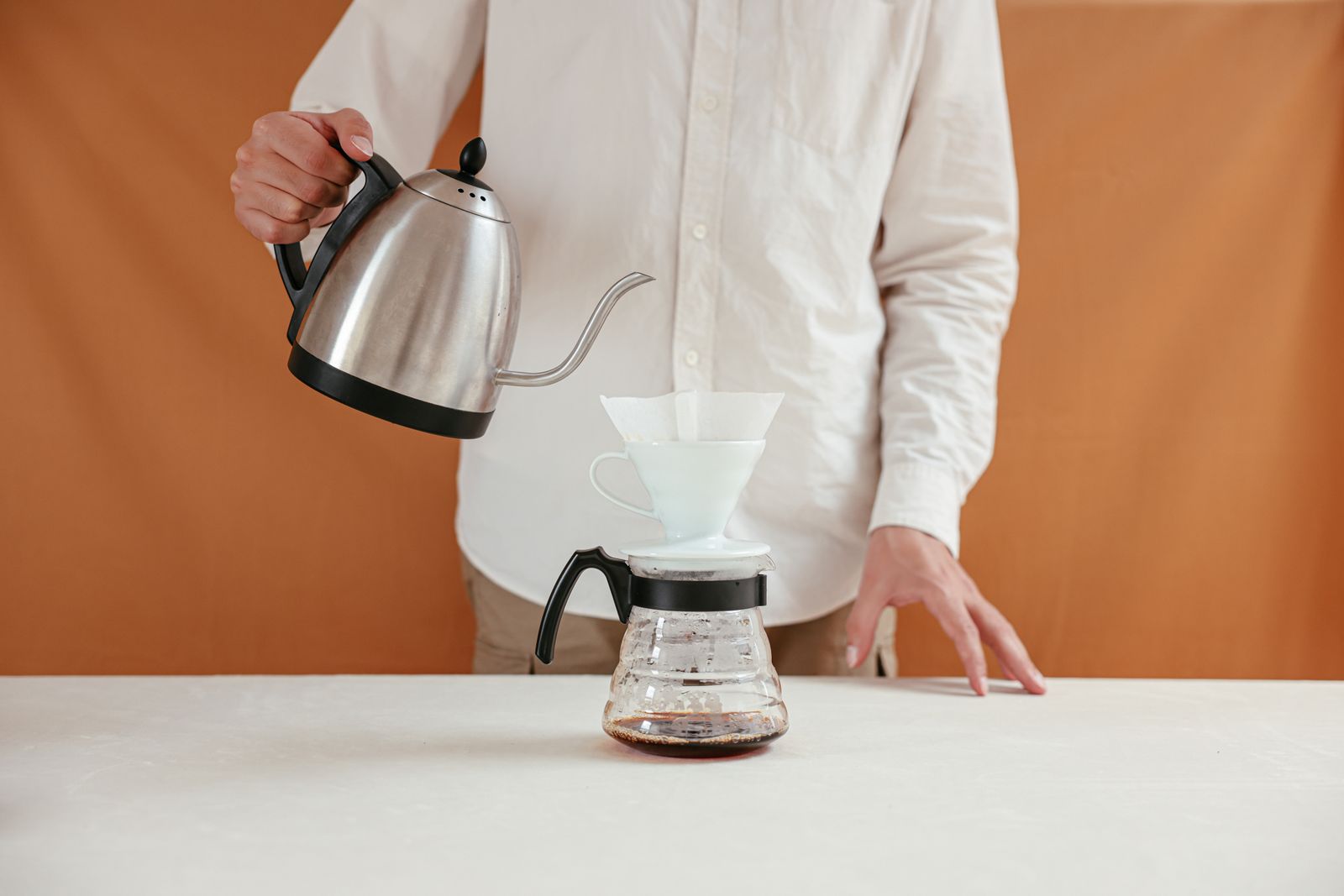
Most drippers give you one cup. The Origami gives you two, and the only thing you change is the paper.
Drop in a cone filter and it brews fast and bright, close to a Hario V60. Drop in a flat-bottom wave filter and it slows down, rounds out, and turns sweet. Same dripper, same coffee, two genuinely different results. That flexibility is the entire point of the design, and it is also why new owners get stuck: nobody tells you which paper to buy.
Here are both recipes, and how to decide which one you actually want.
What the Origami Dripper Actually Is
The Origami is a Japanese dripper, and unusually for coffee gear, it comes out of a pottery town rather than a factory town.
The brand launched in 2014, in the middle of the third-wave boom. Its products are made in Toki City, in Gifu Prefecture — the heart of Mino ware (mino-yaki). Potters have been firing in this area for more than 1,300 years, and the region still produces over half of all the ceramic tableware made in Japan. The earliest version of the dripper took its shape from the balloon flower, the city flower of Toki. By 2016 it had evolved into the form everyone recognizes now: twenty sharp vertical ribs running up the cone, folded-looking, which is where the name came from.
Yasuo Suzuki of Trunk Coffee in Nagoya is generally credited with driving the design, working alongside the local potters. The brand's own history page does not name a designer, so treat the attribution as the industry's account rather than an official one.
Those twenty ribs are not decoration. They hold the paper off the ceramic wall so that air and water can escape from the sides of the filter instead of being trapped against it. That is what makes the Origami drain quickly, and it is why one dripper can handle two filter shapes without choking. For the wider field, see our guide to Japanese pour-over drippers.
One more thing worth knowing: the porcelain is thin, and thin porcelain sheds heat quickly. Preheating matters more here than it does on a chunky ceramic dripper.
The Real Selling Point: It Takes Two Different Filters
The Origami has a wide 25mm opening and steep walls. That combination means the dripper does not impose a brew style on you — the paper does.
| Cone filter (V60-style) | Wave filter (flat bottom) | |
|---|---|---|
| Coffee bed shape | Deep, tapered | Shallow, flat |
| Flow rate | Fast | Slower, more even |
| What you taste | Clarity, acidity, defined flavors | Sweetness, body, roundness |
| Best for | Light roasts, floral and fruity coffees | Medium roasts, blends, anything you drink with milk |
| Forgiveness | Rewards a steady pour | Very forgiving |
Sizes matter here too. The Origami comes in two:
| Size | Dimensions | Brews | Cone filter | Wave filter |
|---|---|---|---|---|
| S | Φ115 × H70mm | Up to 2 cups | Hario V60 01 | Kalita Wave 155 |
| M | Φ138 × H87mm | Up to 4 cups | Hario V60 02 | Kalita Wave 185 |
Origami sells its own papers (Cup2 and Cup4), but V60 and Kalita Wave filters fit, which means you can buy replacements anywhere. That is a bigger deal than it sounds — it is the main reason the Origami is easy to live with outside Japan. Our filter comparison goes deeper on how the paper itself changes the cup.
Note that the dripper does not come with a stand. It sits on most servers and mugs, but check the fit before you commit to one.
What You Need Before You Brew
- A burr grinder. Non-negotiable for pour over; see our manual grinder guide.
- A gooseneck kettle. The Origami drains fast, so pour control matters more than usual. How to choose one.
- A scale that reads to 0.1g, and a timer.
- Decent water. Soft, low-mineral water is the Japanese default, and it flatters these coffees. Here is why.
Both recipes below sit between 1:16 and 1:17. If that number means nothing to you yet, start with coffee ratios explained.
Always rinse the paper. Pour hot water through the filter into your server, then dump it out. This kills the papery taste and preheats the thin porcelain at the same time.
Recipe 1 — Cone Filter, for Clarity
This is the one for a light-roast single origin. It runs close to a V60 recipe, but a touch faster.
- Coffee: 15g
- Water: 250g (about 8.5 oz)
- Ratio: 1:16.7
- Grind: Medium-fine — slightly finer than you would use in a V60, because the Origami drains quicker
- Water temp: 200°F (93°C)
- Target time: 2:30–2:45
| Time | Pour to | What you are doing |
|---|---|---|
| 0:00 | 45g | Bloom. Wet all the grounds, then swirl gently |
| 0:40 | 125g | First main pour, spiral from the center out |
| 1:15 | 190g | Second pour, keep the bed level |
| 1:45 | 250g | Final pour |
| 2:30–2:45 | — | Drawdown finishes. Lift the dripper off |
If it finishes well before 2:15, grind finer. If it runs past 3:00, grind coarser. The logic is the same as our V60 recipe — if you already have a V60 dialed in, you are most of the way there.
Recipe 2 — Wave Filter, for Sweetness and Body
Swap in a flat-bottom wave paper and the same coffee comes out thicker and sweeter. This is the recipe for medium roasts, blends, and mornings when you do not feel like concentrating.
- Coffee: 20g
- Water: 320g (about 11 oz)
- Ratio: 1:16
- Grind: Medium — noticeably coarser than Recipe 1
- Water temp: 195°F (91°C)
- Target time: 3:00–3:30
| Time | Pour to | What you are doing |
|---|---|---|
| 0:00 | 60g | Bloom. Flat beds need a gentle swirl to wet evenly |
| 0:45 | 160g | Pour into the center, let it spread outward |
| 1:30 | 240g | Keep the water level steady, do not let the bed run dry |
| 2:10 | 320g | Final pour |
| 3:00–3:30 | — | Drawdown finishes |
Keep your pours inside the middle of the bed. On a flat filter, water that runs down the wall skips the coffee entirely. Our Kalita Wave recipe covers that habit in more detail.
Kurasu, the Kyoto roaster, runs a much shorter wave recipe — 15g to 270g, brewed cooler at 190–194°F (88–90°C) and lifted off the server at around 80 seconds. Try it once you are comfortable; it produces a lighter, more tea-like cup.
What the World Champion Did
The Origami earned its reputation the hard way. At the 2019 World Brewers Cup in Boston, Du Jianing of China won the title brewing on an Origami with a flat-bottom filter, choosing it because water moves through the bed quickly and favors clarity. She brewed a Gesha from Ninety Plus, roasted for about four minutes in an Ikawa sample roaster, and ground the coffee twice — once coarse, with the chaff removed, then again finer — for a more even particle distribution.
Most of that is not reproducible at home, and you should not try. The useful takeaway is smaller and more practical: the champion reached for the flat-bottom paper, not the cone. If you only buy one kind of filter for your Origami, the wave is the safer default.
Ceramic or Air? Which Version to Buy
The Origami comes in two main materials, and the conventional wisdom about them is wrong.
Ceramic (Mino ware). The original, and the one that looks like a piece of pottery, because it is one. Retailers list it as dishwasher safe. The tradeoffs are that it breaks, and that its thin walls pull heat out of your brew unless you preheat properly.
Air (AS resin). Roughly half the weight, cheaper, and far harder to break. The surprise is thermal: the maker's claim is that the resin body loses less heat than the porcelain and gives more stable extraction — the opposite of what most people assume about plastic versus ceramic. It squares with the fact that thin porcelain is a poor insulator. One caveat: the Air is rated to 100°C, so let boiling water settle before it goes in.
Buy ceramic because you want the object on your counter. Buy Air if you want the more forgiving brewer, or if it is going in a bag.
Troubleshooting
Brew finishes too fast and tastes thin and sour. Grind finer and pour more slowly. The Origami's wide opening punishes a coarse grind more than a V60 does.
Brew stalls and tastes bitter or dry. Grind coarser. On a wave filter, a stall usually means the bed compacted, so pour more gently next time.
Tastes flat and dull. Check your water before you blame the coffee.
The cup is inconsistent day to day. Switch to the wave filter. It is the more forgiving of the two by a wide margin, and consistency is most of what makes coffee good at home. Our five common pour-over mistakes covers the rest.
Where to Start
Buy the M size and a box of wave filters. That combination is forgiving, it makes enough coffee for two people, and it will not embarrass you on a morning when you are half awake.
Then, when you have a bag of something light and floral that you actually want to taste, put a cone filter in the same dripper. That is the trick nobody mentions when you buy one: you already own both brewers.
For the wider tradition this dripper comes out of, start with our guide to Japanese pour over coffee.