What Is Japanese "Morning Service" (Mōningu)?
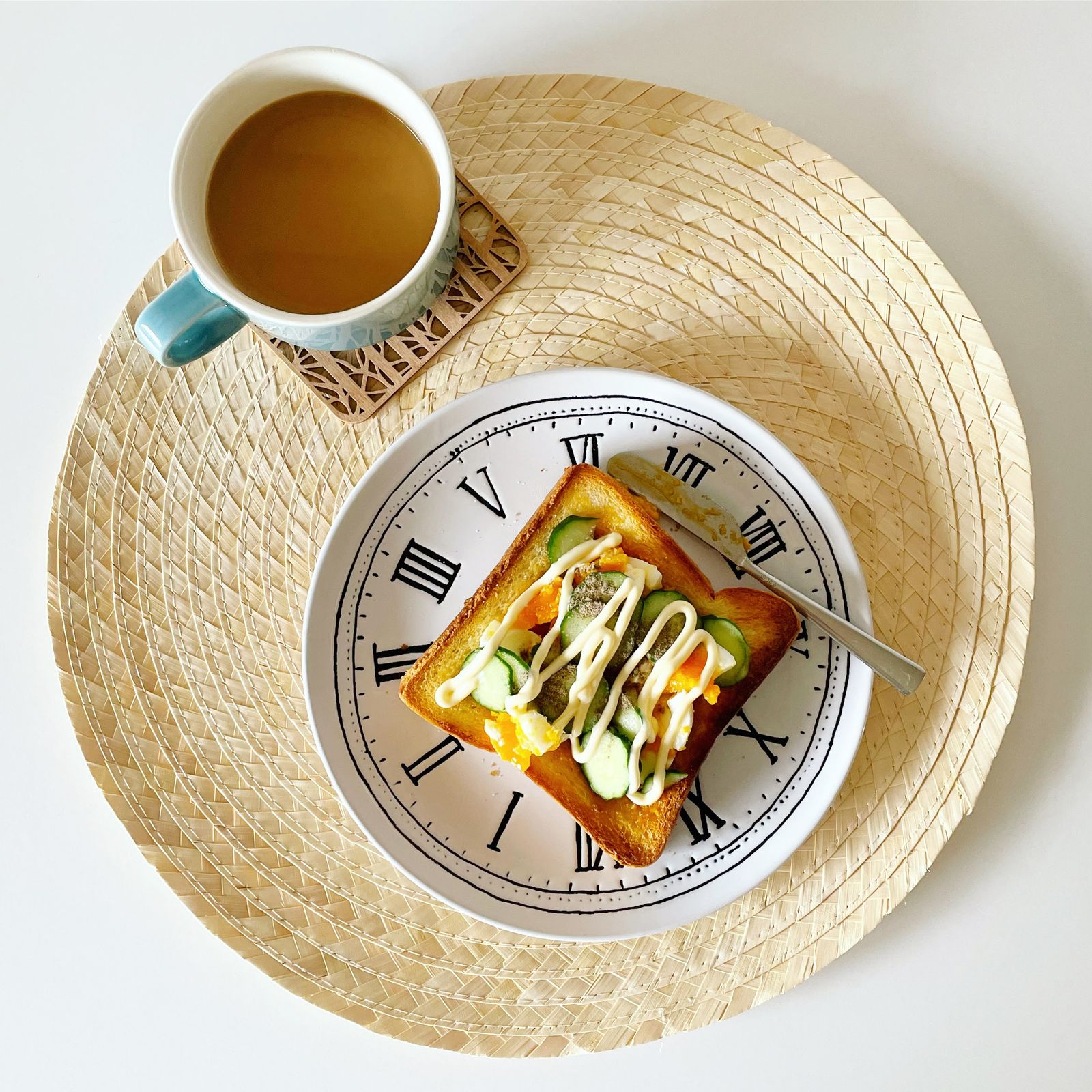
You walk into a coffee house in Japan, settle into a vinyl booth, and order a single cup of coffee. A few minutes later a plate arrives that you never asked for: a thick slice of buttered toast, a boiled egg, maybe a little salad. You check the menu again, certain there's been a mistake. There hasn't. In the United States you get what you pay for—one coffee means one coffee. In much of Japan, before 11 a.m., one coffee can mean breakfast. This is morning service (モーニングサービス, often shortened to mōningu, モーニング): the beloved Japanese café custom of adding toast, eggs, and other light bites to your morning drink, either free or for a small set price. Here's where it came from, why cafés happily give food away, the wild regional specialties it inspired, and how to order it yourself.
So, What Exactly Is "Morning Service"?
At its simplest, morning service means this: you order one drink in the morning, and a small breakfast comes with it. Often the food is genuinely free—you pay only for the coffee. Sometimes it's a modest "set price," typically a few hundred yen (very roughly $2–4) above the drink alone. Either way, the deal is the same in spirit: a cup of coffee that arrives with company.
The window is what makes it a morning service. Most cafés serve it from opening—somewhere between 7 and 9 a.m.—until around 11 a.m., after which the regular menu takes over. Exact hours and prices vary from shop to shop, so it's always worth a quick check before you go.
What lands on the plate depends on where you are. A typical Western-leaning set might be buttered toast, a boiled egg, and a small salad or a slice of ham. But in and around Nagoya—the custom's spiritual home—things get more generous and more inventive: sweet red-bean toast, rice balls, savory steamed egg custard, and more.
A quick note on the word. The formal term is morning service, but almost no one says the whole thing. In conversation it's just mōningu—a Japanese take on the English word "morning." If you've had a "continental breakfast" at a hotel or "bottomless coffee" at a diner, this is a cousin, but not a twin: here you order a single drink, and a real little meal comes along for the ride.
The Stage: Japan's Kissaten Coffee Houses
Morning service didn't appear in a vacuum. It grew up inside the kissaten (喫茶店)—the traditional, often Shōwa-era Japanese coffee house, with its dark wood, low lighting, and unhurried pace. These are the places where a cup of coffee is meant to be lingered over, not grabbed on the way out the door. The morning custom is a piece of that larger world: a way the kissaten welcomed people at the start of the day.
We'll keep the spotlight on the breakfast here rather than the coffee house itself. For the full story of these Shōwa-era establishments—their history, their atmosphere, and why they matter—see What Is a Kissaten?. And if you fall down the rabbit hole of coffee-house subcultures, there's a whole world of vinyl-and-espresso listening rooms in What Is a Jazz Kissa?.
Where It Started: Ichinomiya, Nagoya, and Postwar Textile Towns
The most-repeated origin story points to Ichinomiya, a textile town near Nagoya in Aichi Prefecture. By most accounts, this is where morning service took root, though sources disagree on exactly when—some trace it to the prewar textile boom of the 1920s and '30s, others to the postwar decades of the 1950s and '60s.
The story goes something like this. Ichinomiya's economy ran on textiles, and the weaving looms were loud—too loud to talk business over. So merchants and mill workers took their meetings to the local kissaten instead, arriving early and often. To thank these loyal morning regulars (and to keep them coming), café owners reportedly began adding a little something on the house—a boiled egg and some peanuts alongside the coffee.
Whatever the exact first plate, the idea caught. Nearby cafés matched it so they wouldn't lose customers, the practice spread across the greater Nagoya region, and from there it rippled outward across much of Japan.
Why Would a Café Give Away Breakfast?
This is the part that trips up American readers, so it's worth pausing on. If the food is free, how does the café stay in business?
The answer is that "free" is doing some clever work. The morning hours are a café's quietest stretch—tables sit empty, the staff is already on the clock, and the coffee is already brewed. Filling those seats with paying drinkers, even at a thin margin, beats an empty room. More importantly, morning service builds regulars. A neighborhood that comes in every day for its egg and toast is a neighborhood that keeps a small café alive through the slow years. The toast isn't charity; it's a quietly brilliant customer-loyalty program that happens to feel like a gift. That combination—genuine hospitality that also makes business sense—is a big part of why the custom stuck.
Ogura Toast and the Flavors of Nagoya Mornings
If morning service has a signature dish, it's ogura toast (小倉トースト)—a Nagoya specialty that sounds improbable until you taste it. Take a thick slab of toast, spread it with butter, and pile on ogura-an: sweet, glossy, chunky red-bean paste made from azuki beans. The magic is in the contrast. The butter is salty and rich, the bean paste is dark and sweet, and the toast underneath is hot and crisp. It's the same logic as salted caramel or bacon on pancakes, and it's exactly as addictive.
Ogura toast is said to have been born at a Nagoya kissaten called Mitsuba, in the city's Sakae district, back in the 1920s—reportedly after a shopkeeper noticed customers dipping their toast into sweet red-bean soup and decided to skip the middle step. However it started, it spread until it became a fixture of nearly every coffee house in the region.
Nagoya mornings tend to run richer than the rest of the country's, too—more items on the tray, and stranger, more wonderful ones. Depending on the café you might find a small salad, a rice ball, savory steamed egg custard (chawanmushi), or even a portion of the city's famous iron-skillet spaghetti. Nagoya simply does breakfast bigger.
A typical Nagoya morning set often looks something like:
- Thick buttered toast (or ogura toast)
- A boiled egg
- A small salad or side
- A cup of hot coffee
Sweet beans on toast is the kind of thing you have to see to believe—which is precisely why photos of ogura toast travel so well.
Morning Service Today: Komeda and the Chains
For decades morning service lived mostly in independent kissaten. Today it's gone nationwide, carried in large part by big coffee chains—and the standard-bearer is Komeda's Coffee (コメダ珈琲店). Founded in Nagoya in 1968, Komeda has grown into Japan's largest coffee-house chain, with more than a thousand locations and a comfortable, retro feel that deliberately echoes the classic kissaten.
Komeda's take on morning service is refreshingly simple: order any drink before 11 a.m. and you get toast plus a choice of topping—a boiled egg, an egg-salad paste, or a spoonful of that same sweet red bean—at no extra charge. It's a low-stakes way for first-timers to experience the custom, since it works the same at every branch. And while you're there, Komeda's other claim to fame is the shiro noir (シロノワール): a warm Danish pastry crowned with a swirl of cold soft-serve ice cream, sweet and hot and cold all at once.
Komeda is the most famous, but it's far from alone. Plenty of other chains and countless independent cafés keep some version of the morning ritual going, which means you're rarely far from a free breakfast in Japan. Just remember that offerings, hours, and prices change from place to place and over time—it's always worth a quick check before you go.
How to Order Morning Service (For Your Trip to Japan)
Morning service is easy to order once you know the shape of it. Here's a first-timer's cheat sheet.
- Go early. Service usually runs from opening until around 11 a.m., though the exact window varies by shop. Arrive before the crowd, grab a seat, and order your drink.
- Look for the word. Menus mark it as モーニング (mōningu). If you spot that, you're in the right place at the right time.
- You order the drink; the food follows. The set is triggered by ordering a beverage—usually coffee. You don't order the toast separately; choosing your drink brings the breakfast with it.
- A phrase that works: "Mōningu, kōhī de" (モーニング、コーヒーで)—roughly, "the morning set, with coffee." Point at the menu and you'll be understood.
- Know the fine print. "Free" still means you buy one drink. And once the morning window closes, you're ordering off the regular menu at regular prices.
That's really all there is to it. One drink, one word, and breakfast takes care of itself.
Why "Morning Service" Is So Loved (and What It Says About Japan)
Strip away the toast and the eggs and morning service is about something larger: a place to start the day. For generations of regulars, the neighborhood kissaten has been a second living room—somewhere to read the paper, nod at the same faces, and trade a few words with an owner who remembers how you take your coffee. The free breakfast is the handshake at the door.
There's something quietly moving about the fact that a custom born from a shop owner's gratitude has survived into an age of convenience stores and app-ordered lattes. The efficient thing would have been to charge for the toast long ago. That so many cafés still don't says a lot about how much Japan values the small, daily ritual of being welcomed. It's hard not to finish reading about it and wish your own corner café did mornings like this.
Bring the Morning Set Home
You don't need a plane ticket to borrow the spirit of mōningu. Toast a slice of good bread—cut it thick—add butter and, if you're feeling adventurous, a spoonful of sweet red-bean paste. Set a boiled egg beside it. Then pour yourself an unhurried, carefully made cup of coffee, and give the morning a little room to breathe.
It all starts with that cup—here's how to make Japanese pour-over coffee. Brew it slowly, butter the toast, and let breakfast be something you sit down for. That, more than the free egg, is what morning service was always really about.
FAQ
Is morning service really free?
Often, yes—you pay only for your drink and the food comes with it. Some cafés charge a small "set" price instead, typically a few hundred yen (very roughly $2–4) above the drink. It varies by shop.
What time does morning service end?
Most cafés serve it from opening until around 11 a.m., then switch to the regular menu. Times vary, so check ahead.
Where did morning service start?
The popular origin story credits Ichinomiya, a textile town near Nagoya—though sources differ on the exact era, tracing it anywhere from the prewar 1920s to the postwar 1950s.