Japanese Iced Coffee (Flash Brew): The V60 Method
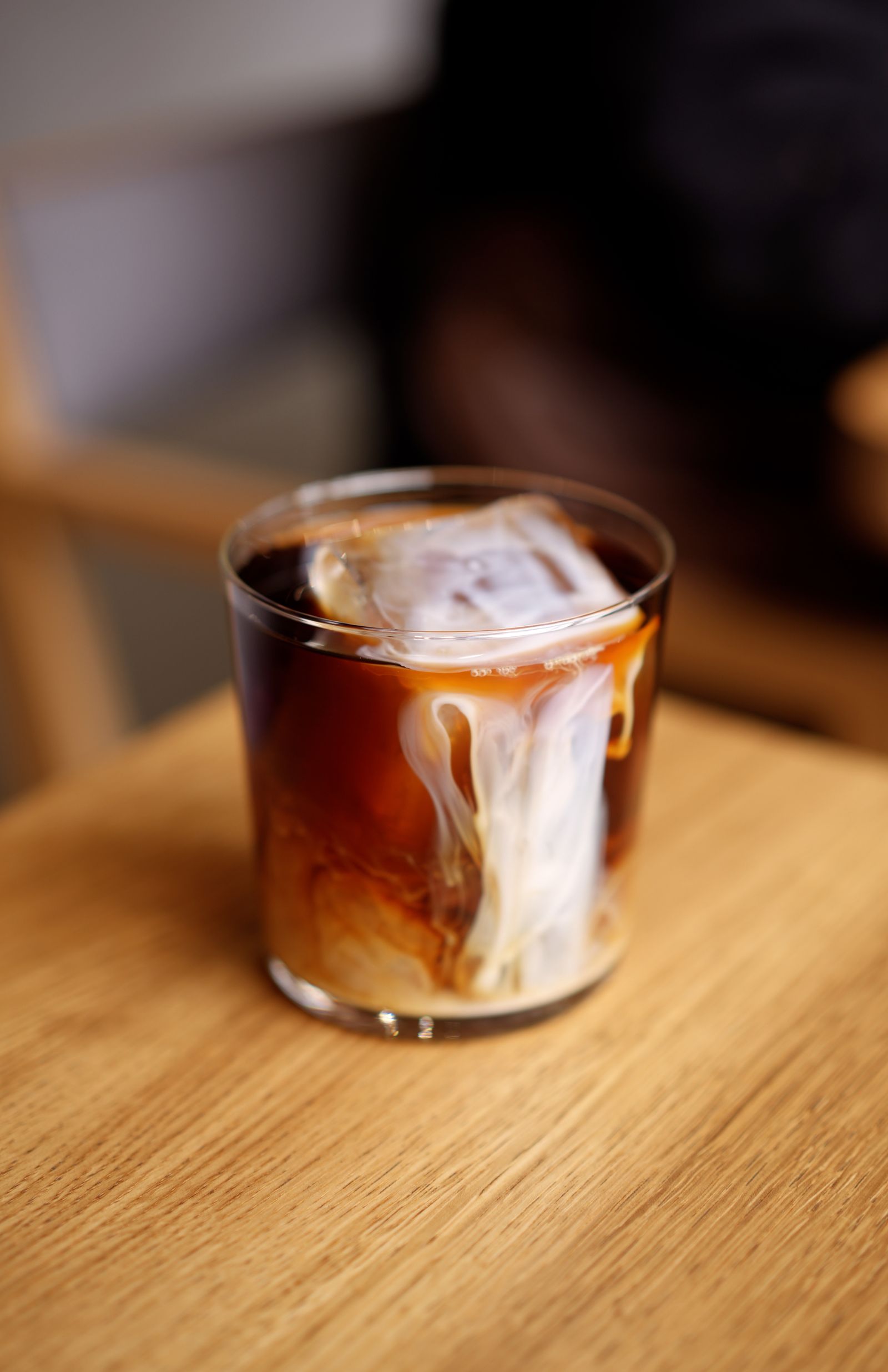
Japanese iced coffee — better known to a lot of people as flash brew — is iced coffee you brew hot and drop straight onto ice. You make a strong pour-over in a V60, but instead of catching it in a cup, you let the hot coffee fall directly onto a glass full of ice. The ice does double duty: it chills the coffee the instant it lands, and the melt becomes part of your water.
The payoff is an iced coffee that's bright, aromatic, and clean — and it's ready in about three to five minutes, not overnight. That's the headline difference from cold brew, which trades that brightness for a smoother, lower-acid cup but takes 12 to 24 hours. (More on that trade-off below.)
The technique comes out of Japan's specialty and café scene, where brewing hot over ice is a standard way to serve a cold cup without dulling the coffee's character. It isn't mysterious or fussy — think of it as the faster, brighter alternative to cold brew.
In this guide:
- The flash brew ratio — and why ice counts as part of your water
- A step-by-step V60 recipe you can brew today
- Flash brew vs. cold brew: which one to make
- Troubleshooting a weak, watery, or sour cup
What Is Japanese Iced Coffee (Flash Brew)?
Flash brew is hot coffee brewed directly over ice. You extract at full temperature — pulling out the aromatics, the fruit, and the acidity the way a hot brew does — and then lock that flavor in place by chilling it instantly as it hits the ice. Cool a hot coffee slowly and it goes flat and dull; flash-chilling it preserves the bright top notes that make a good single origin worth drinking.
A quick note on names, because they get used interchangeably: "Japanese iced coffee," "flash brew," and "iced pour-over" all describe the same basic method — a hot brew dripped onto ice. You'll see all three across recipes and café menus. We'll use "flash brew" and "Japanese iced coffee" throughout.
This is part of our larger guide to Japanese pour-over coffee, which covers the gear, the ratios, and the basics of the hot cup. Here we're zeroing in on the iced version.
Flash Brew vs. Cold Brew: Which Should You Make?
This is the question most people are really asking, so let's settle it. Neither one is "better" — they're built for different jobs, and the right pick depends on what you want from the cup.
| Flash brew (Japanese iced) | Cold brew | |
|---|---|---|
| How it's made | Hot V60 pour, straight onto ice | Coarse grounds steeped in cold water |
| Time | About 3–5 minutes, on demand | 12–24 hours |
| Keeps for | Best the same day, fresh | Up to about 1–2 weeks refrigerated |
| Taste | Bright, fruity, floral, complex | Smooth, mellow, chocolatey/nutty |
| Acidity | Higher — acidity stays lively | Lower — softer, rounder |
| Best roast | Light to medium | Medium-dark to dark |
The short version: want a single cup right now that shows off a coffee's brightness and character? Brew flash. Want to batch a few days' worth of smooth, low-acid coffee ahead of time? Make cold brew.
The why comes down to temperature. Hot water extracts more of a coffee's aromatic and acidic compounds, so flash brew tastes lively and layered — great for a fruity Ethiopian or a floral washed coffee. Cold water pulls those out slowly and gently, so cold brew lands softer and sweeter, which flatters chocolatey, nutty, darker roasts. Pick the method that matches the coffee and the mood.
A quick storage note: cold brew is best within the first few days even though it keeps for a week or two, while flash brew is meant to be poured and enjoyed fresh — it's a single-serving method, not a make-ahead one.
There's also a third option most people miss: Kyoto-style slow drip, where cold water passes through the grounds one drop at a time over several hours. It sits between these two — cleaner and more defined than a steeped cold brew, gentler than anything brewed hot.
The Flash Brew Ratio: Why Ice Is Part of Your Water
Here's the one idea that makes flash brew click: the ice isn't just a chiller — it's part of your water.
In a normal hot pour-over you might use a 1:15 ratio (1 gram of coffee to 15 grams of water). Flash brew uses that same total water budget, but you swap a chunk of it for ice. So you brew with less hot water — which means you brew stronger — and the melting ice dilutes it back to the right strength as it goes. Skip this and you'll end up with watery coffee, because the melt adds water you didn't plan for.
How much ice? Recipes vary, and that's fine — there's a working range, not one magic number:
- Ice: roughly one-third to one-half of your total water
- Hot water: the remaining one-half to two-thirds
Some brewers run ice at about 35% and hot water at 65%; others split it closer to 50/50. We suggest starting around 40% ice, 60% hot water and adjusting from there — lean toward more ice if your cup comes out strong, more hot water if it's thin.
The math, step by step:
- Pick your coffee dose (grams).
- Multiply by 15 for your total water (coffee × 15).
- Take about 40% of that total as ice — put it in the glass or carafe first.
- The remaining 60% is the hot water you'll actually pour.
| Coffee | Total water (×15) | Ice (~40%) | Hot water (~60%) | |
|---|---|---|---|---|
| One cup | 20 g | 300 g (~10 oz) | ~120 g | ~180 g |
| Two cups | 30 g | 450 g (~15 oz) | ~180 g | ~270 g |
For the fundamentals of pour-over ratios on the hot side, see our guide to Japanese pour-over coffee.
How to Make Japanese Iced Coffee with a V60: Step by Step
This is the whole recipe, start to finish. You'll need:
- A V60 dripper and its paper filters
- A gooseneck kettle (an electric one with temperature control makes this easier)
- A scale that reads to 0.1 g
- A carafe or glass to brew into
- Coffee and ice
Using our one-cup numbers: 20 g coffee, 300 g total water, ~120 g ice, ~180 g hot water.
- Put the ice in first. Weigh out your ice (~120 g) straight into the carafe or glass under the dripper. This is non-negotiable — the coffee has to land on ice to flash-chill as it drips.
- Rinse the filter. Set the filter in the V60 and pour hot water through it into the carafe, then discard that water. This rinses off any papery taste.
- Grind and dose. Grind 20 g of coffee to medium-fine — think table salt. Add the grounds and give the bed a gentle shake to level it.
- Bloom for 30–45 seconds. Pour about twice the weight of the coffee in hot water (~40 g) to saturate the grounds and let them release gas. This "hot bloom over ice" is the heart of the method.
- Pour the rest in slow, continuous circles. Pour the remaining hot water in a thin, steady stream, starting at the center and spiraling out in small circles — keep it off the filter's edge. Aim for water at 198–205°F (92–96°C). The Japanese pouring technique matters here too; we go deep on why in our café-quality pour-over guide.
- Stir and serve. Once it's finished dripping, give it a quick stir or swirl to even out the chill. Add fresh ice if you like, and serve right away. Total brew time runs about 3–5 minutes.
Dialing It In: Beans, Roast & Grind for Iced
A few variables decide whether your flash brew is good or great.
Roast. Light to medium roasts shine here — the hot extraction plus the instant chill keeps their fruity and floral notes crisp and alive. Darker roasts tend to taste better the cold brew way, where the long, cold steep mellows them out. If you've got a bright single origin sitting around, this is the brew for it.
Grind. Start at the same grind you'd use for a hot V60, or go a touch finer. Because you're brewing stronger to leave room for the melting ice, a slightly finer grind helps you get there. If the cup tastes thin or watery, go finer.
Beans and ice. Use freshly roasted coffee — flash brew rewards aromatics, and stale beans have fewer to give. And don't overlook the ice: bigger cubes melt slower, so they dilute less and keep your cup from going watery. Cubes made from filtered water won't add any off taste.
For more on choosing beans and grind size, see our Japanese pour-over guide.
Troubleshooting: Weak, Watery, or Too Sour
Weak or watery. The ice diluted it too much. Use more hot water (and a little less ice), grind a bit finer to brew stronger, or switch to bigger ice cubes that melt slower. The most common culprit is forgetting that the melt is part of your water — brew stronger to compensate.
Too sour. That's usually under-extraction — you didn't pull enough out of the grounds. Grind finer, nudge your water temperature up toward 205°F (96°C), and pour more slowly and evenly so all the grounds get even contact.
Bitter or heavy. That's over-extraction, or a roast that's too dark for the method. Grind coarser, and consider a lighter roast that suits flash brew better.
The ice all melted before it finished. Either you didn't start with enough ice, or your pour was too slow and the hot coffee melted it on the way down. Add more ice up front and keep your pour moving steadily.
For more general extraction troubleshooting, see the troubleshooting section in our café-quality pour-over guide.
The Gear (Minimal): What You Actually Need
You don't need much. Here's the short list.
- A V60 dripper (size 01 or 02) and paper filters — the cone that makes this method what it is. The Hario V60 02 is the standard choice.
- A gooseneck kettle — for a slow, controlled pour; an electric model with temperature control takes the guesswork out.
- A 0.1 g scale — ratios only work if you can weigh coffee, water, and ice accurately.
- A burr grinder — for an even, consistent grind.
- An ice tray for big cubes — larger cubes melt slower and keep your cup from getting watery.
For the full rundown on choosing pour-over gear, see the gear section of our Japanese pour-over guide.
Frequently Asked Questions
Is Japanese iced coffee the same as flash brew?
Yes. "Japanese iced coffee," "flash brew," and "iced pour-over" all refer to the same method: brewing hot coffee directly over ice so it chills instantly. The names are used interchangeably.
Is flash brew the same as cold brew?
No. Flash brew is brewed hot over ice in a few minutes and tastes bright and aromatic. Cold brew steeps in cold water for 12–24 hours and tastes smooth and low-acid. Flash brew is for drinking fresh; cold brew is for batching ahead.
How much ice do I use for flash brew?
Roughly one-third to one-half of your total water. A good starting point is about 40% ice and 60% hot water — so for 300 g total water, that's around 120 g of ice. Adjust to taste.
What roast is best for iced coffee made this way?
Light to medium roasts work best with flash brew, since the hot extraction and quick chill keep their fruity, floral notes lively. Save darker roasts for cold brew.
Can I make flash brew without a V60?
Yes. Any pour-over dripper works — a Kalita Wave, a Chemex, or another cone — as long as you brew hot directly over ice. The V60 is just a popular, easy-to-control choice.
Why brew over ice instead of just chilling the coffee afterward?
Chilling hot coffee slowly dulls its aromatics and flattens its flavor. Brewing straight onto ice flash-chills it in seconds, locking in the bright top notes — that's the whole point of the method.
For more on the names and the bigger picture, see our guide to Japanese pour-over coffee.
The Takeaway
Flash brew is the bright, fast alternative to cold brew: a hot V60 pour dropped straight onto ice, ready in minutes. Remember that the ice is part of your water, so brew stronger to leave room for the melt. And reach for light-to-medium roasts to get the most out of it.
Next reads:
- The full picture of the method: Japanese pour-over coffee
- Master the café-quality pouring technique: how to brew pour-over like a Japanese café
- Where this coffee culture comes from: what is a kissaten?