Best Japanese Pour-Over Drippers, Ranked (2026 Guide)
Some links below are affiliate links. We may earn a commission at no cost to you. As an Amazon Associate we earn from qualifying purchases.
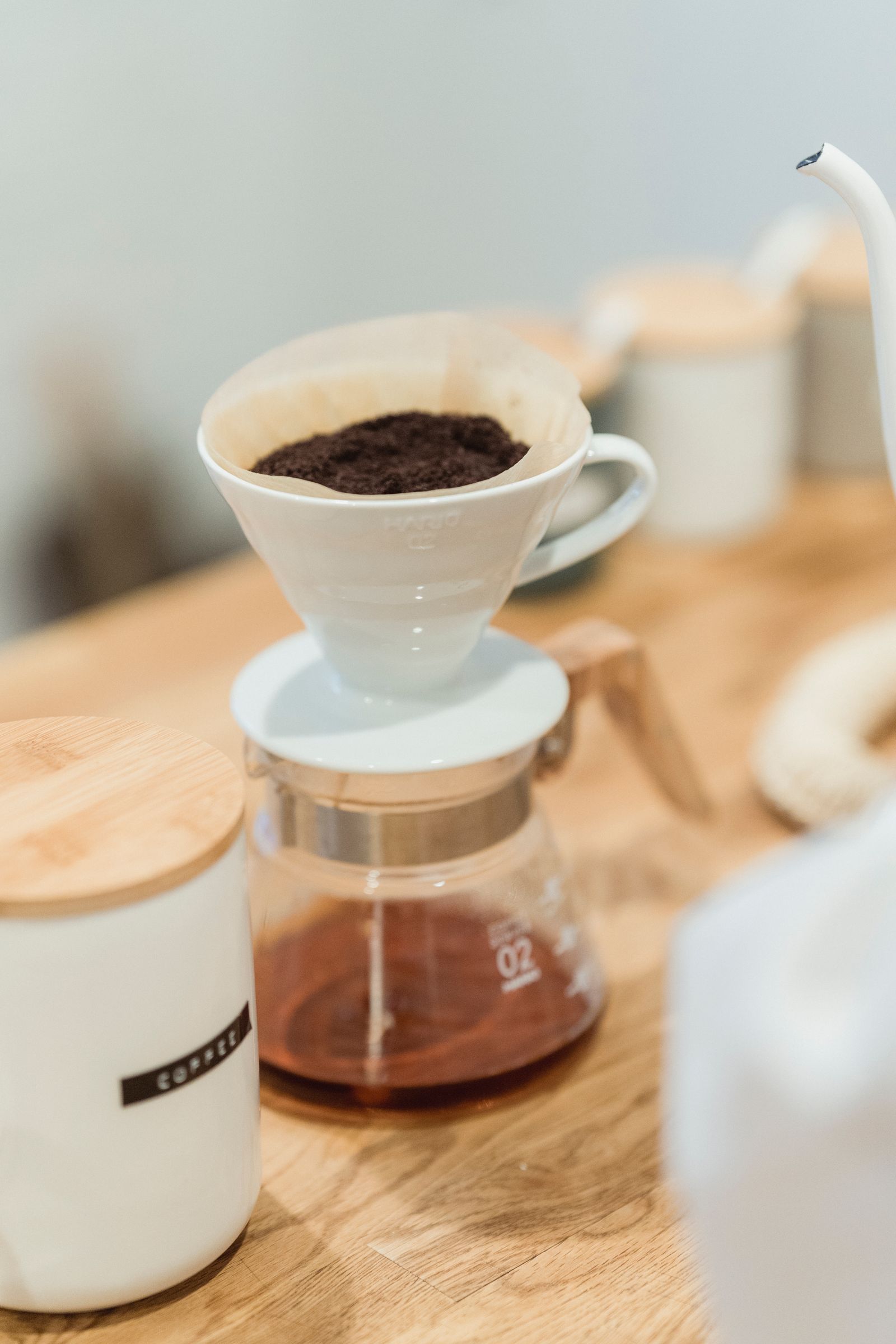
Japanese pour-over drippers quietly became the world standard. Walk into a serious specialty café almost anywhere, and there's a good chance the barista is brewing on gear designed in Japan. But here's the thing most "best dripper" roundups get wrong: there isn't one winner. The right dripper depends entirely on the cup you want and how much you want to fiddle to get it.
So instead of crowning a single champion, this guide ranks four of the best Japanese pour-over drippers by role. Our goal isn't to pick the one dripper for everyone — it's to help you pick the one that's right for you.
A note on where we're coming from: Kissa Lab is based in Japan, in the place where much of this gear is designed and made, and we brew on these drippers day in and day out. That's the lens here — not a lab bench, but a kitchen counter in Tokyo.
One more thing: this is a buying guide, not a brewing guide. We won't get into ratios or step-by-step recipes. If you want to know how to actually brew, we'll point you to the right recipe along the way. And if you're new to the whole method, start with our overview of Japanese pour-over coffee and come back here to choose your gear.
In a hurry? Our quick picks:
- Best overall — Hario V60 (ceramic): Check on Amazon
- Best for beginners — Kalita Wave 185: Check on Amazon
- Best daily driver — CAFEC Flower: Check on Amazon
Not sure which to get? The Hario V60 is the safe default — here's the full reasoning.
How we ranked these (and what "best" means)
We didn't rank these by price or by which name shows up most on Instagram. We ranked them the way we'd actually recommend one to a friend: design intent × how it tends to brew × who it's genuinely for.
Every one of these drippers was engineered with a specific cup in mind. The V60's steep cone and single large hole exist to give you control. The Kalita Wave's flat bottom and three tiny holes exist to take control away from you — on purpose, so you can't mess it up as easily. Those aren't better-or-worse differences. They're different tools for different drinkers.
That's why there's no single "absolute best" here, and we're not going to pretend otherwise. Instead, each dripper gets a role it earns. Read the role, match it to yourself, and you're most of the way to the right choice.
(For transparency: some links on this page are affiliate links, disclosed at the top. Our ranking wouldn't change either way — we rank by fit, not by commission.)
Cone vs flat bottom — the one distinction that decides your cup
If you learn one thing before buying, make it this. Nearly every dripper on the market is either a cone or a flat bottom, and that single difference shapes your coffee more than the brand on the box.
Cone drippers funnel water toward a single point at the bottom. The water converges in the center and drains faster, so the coffee bed sits deeper and the flow moves quicker. The payoff is a clean, bright cup that shows off a coffee's acidity and delicate notes. The catch: your pouring technique lands directly in the cup. Pour well and it sings; pour sloppily and it wobbles. A cone rewards skill and punishes autopilot.
Flat-bottom drippers spread water across a wide, even bed. The extraction is slower and more uniform, which tends to produce a sweeter, rounder, more balanced cup — and, crucially, one that's forgiving. Small mistakes in your pour get smoothed out by the geometry itself.
Then there are the hybrids. The Origami can take a cone filter or a flat-bottom filter, so it swings between both worlds depending on what you drop in. And the CAFEC Flower is technically a cone, but its deep petal ribs make it behave more like something in between — the clarity of a cone with more of a flat bottom's balance.
Keep that spectrum in mind as you read the picks below. It's the axis everything else hangs on.
The best Japanese pour-over drippers at a glance
| Dripper | Role | Shape | Best cup for | Best for |
|---|---|---|---|---|
| Hario V60 | Best overall | Cone | Clarity, brightness | People who want control and the classic |
| Kalita Wave | Best for beginners | Flat bottom | Sweet, balanced, forgiving | New pour-over brewers |
| Origami | Most versatile | Cone (hybrid filter) | Tunable — cone or flat | Experimenters, one-dripper-for-all |
| CAFEC Flower | Best daily driver | Cone (deep ribs) | Balanced body, juicy | Everyday brewers who want less fuss |
Here's why each one earned its role.
Hario V60 — Best overall
If Japanese pour-over has a default, it's the Hario V60. It's the dripper that put this whole style on the global map, and it's still the one we reach for most.
The design is deceptively simple: a 60-degree cone — that angle is where the "60" in the name comes from — with spiral ribs running up the walls and one large hole at the bottom. That single big opening is the key. It means the dripper barely restricts the flow — you control the brew through how you pour. Speed up, slow down, pulse the water, hold back — the V60 does whatever your hands tell it to. The spiral ribs, meanwhile, keep the filter from sealing flat against the cone, so water and gas can move freely.
What it does well: It's the clearest, brightest, most expressive of the bunch. If you want to taste exactly what a coffee has to offer — the florals in an Ethiopian, the acidity in a washed light roast — nothing here beats it. It also has the best ecosystem on the planet: filters and accessories are everywhere, and it comes in ceramic, glass, plastic, and metal so you can pick the material that suits your setup.
The honest downside: all that control cuts both ways. Because the V60 doesn't regulate flow for you, your pour timing shows up directly in the cup. Beginners often get inconsistent results early on — one great cup, one flat one, and no obvious reason why. It takes a little practice to tame.
Who it's for: anyone who enjoys dialing in a brew, chases clarity in light roasts, or simply wants to start with the classic that everything else gets compared to.
The V60 comes in three sizes — 01, 02, and 03 — and the ceramic version in size 02 is our standard pick for one or two cups. If you'd rather have a material that holds heat differently or costs less, the same dripper is sold in glass, plastic, and metal. And once you've got one, our V60 recipe walks you through how to actually brew on it.
→ Check the Hario V60 (ceramic) on Amazon
Kalita Wave — Best for beginners
If the V60 hands you the controls, the Kalita Wave quietly takes them back — and that's exactly why it's the one we recommend to people just starting out.
It's a flat-bottom dripper with three small holes in the base, used with a distinctive wavy-walled paper filter. Together, those two features regulate the flow for you: the small holes meter the water out slowly, and the ripples in the filter keep the paper from sealing against the walls. The result is a brew that's much harder to rush or stall. Reviewers across the board land on the same conclusion — it's the dripper that's toughest to mess up.
What it does well: it delivers a sweet, round, balanced cup with impressive consistency. Brew after brew, you get a similar result even if your pour isn't textbook. It pairs especially well with medium roasts, where that sweetness and body really shine.
The honest downside: you trade some ceiling for that safety net. The Wave won't hit the same peaks of clarity and brightness a well-executed V60 can. And it needs its own proprietary wave filters — worth knowing up front, since they're a little less ubiquitous than cone filters and are an ongoing part of owning one.
Who it's for: anyone new to pour-over, or anyone who'd rather pull a reliable, tasty cup every morning than chase the perfect one.
The Wave comes in two sizes: the 185 handles three or four cups, and the smaller 155 is sized for one or two. The stainless steel version is a solid, near-indestructible default, and it also comes in glass and ceramic if you prefer the look. When you're ready to brew, our Kalita Wave recipe has you covered.
→ Check the Kalita Wave 185 (stainless) on Amazon
Origami Dripper — Most versatile
The Origami is the shape-shifter of the group. It's a cone wrapped in twenty tall, fluted ribs, and its party trick is filter compatibility: it accepts both a cone filter (like the V60's) and a flat-bottom filter (like the Kalita Wave's). One dripper, two brewing personalities.
What it does well: because the filter you choose steers the extraction, you can push the same dripper toward clarity or toward balance just by swapping paper. Drop in a cone filter and it leans bright and clean; use a flat-bottom filter and it rounds out. Those twenty ribs also keep the filter from clogging, so drawdown stays smooth. And it's genuinely beautiful — the porcelain versions are made in Gifu Prefecture in Japan's centuries-old Mino ware ceramic tradition, and come in colors that make it a joy to own.
The honest downside: versatility comes with homework. How the Origami brews depends heavily on which filter and which holder you pair it with, so it's less plug-and-play than the others. To get the most out of it, you'll want to experiment a bit — it's a "master it and it does anything" tool, not a "great cup on the first try" one.
Who it's for: tinkerers who like having options, people who care about how their gear looks on the shelf, and anyone who already owns a V60 but wants something to play with.
The Origami comes in two sizes, S and M, and is often paired with a matching holder to sit securely on different servers and carafes. Not sure whether to run it as a cone or a flat bottom? That choice — covered in the cone vs flat bottom section above — is the one that changes its cup.
CAFEC Flower Dripper — Best daily driver
The CAFEC Flower is the pick we'd hand someone who just wants a great cup every day without thinking too hard about it. It's the least famous name on this list — and, honestly, one of the most underrated.
It's a cone, but its deep, petal-shaped ribs do something clever: they run the full height of the cone to keep an air gap between the paper and the wall, so water flows evenly instead of pooling at the sides. In practice, that puts it right between a cone and a flat bottom — some of the cone's liveliness, some of the flat bottom's balance. That "sits in the middle" character is exactly why so many people who try it make it their everyday brewer.
What it does well: it pulls a juicy, round-bodied cup that resists bitterness and stays consistent day to day. You don't have to nail your pour to get something you're happy with. It's also worth knowing that CAFEC is a serious filter maker — its parent company, Sanyo Sangyo, is credited with developing the world's first cone-shaped paper coffee filter, and CAFEC's Abaca filters are well regarded, so the dripper and its native paper are built to work together.
The honest downside: it flies under the radar. It doesn't have the V60's or Kalita's name recognition, which means fewer tutorials and slightly thinner availability depending on where you shop. You can run V60-style cone filters in a pinch, but the native filters are the better match.
Who it's for: anyone who wants a dependable everyday dripper — someone who'd rather not fuss over a V60 but doesn't want a one-note sweet cup either.
Look for the Flower in porcelain, in a Cup 1 size for one or two cups and a Cup 4 size for when you're brewing for the table. It pairs naturally with CAFEC's own Abaca filters.
→ Check the CAFEC Flower Dripper on Amazon
Which Japanese dripper should you buy?
If you skimmed straight to here, this is the short version:
- Want the classic and full control? → Hario V60. The most expressive cup, and the one everything else is measured against.
- Just starting, or want it forgiving? → Kalita Wave. The hardest to mess up, sweet and consistent every time.
- Want one dripper that does everything? → Origami. Cone or flat bottom, your call, one piece of gear.
- Want a no-fuss everyday cup? → CAFEC Flower. Balanced, juicy, and hard to get wrong.
Still torn between two? Read them side by side in the comparison table near the top of this guide.
Ready to buy? Hario V60 · Kalita Wave 185 · CAFEC Flower
Beyond drippers — other ways Japan brews
Pour-over is where most people start, but it's far from the whole story of how Japan makes coffee. If you catch the bug, a few rabbit holes worth going down:
- Nel drip — the slow, velvety flannel-filter method behind Japan's old-school coffee bars. See nel drip coffee at home.
- Siphon — the theatrical vacuum brewer that's a fixture in Japanese kissaten (traditional coffee houses). Our siphon coffee guide breaks it down.
- Café-level technique — once you've got your dripper, learn to brew pour-over like a Japanese café.
And if you want the big picture on the whole method, our pillar guide to Japanese pour-over coffee ties it all together.
FAQ
Are Japanese pour-over drippers better than others?
"Better" is the wrong frame — they're more intentional. Each one is engineered around a specific cup, whether that's the V60's clarity or the Kalita Wave's forgiving balance. That design focus is why they became the global standard in specialty coffee, and why matching the dripper to your goals matters more than the country of origin alone.
Hario V60 or Kalita Wave for a beginner?
The Kalita Wave, in most cases. Its flat bottom and metered flow regulate the brew for you, so it's far more forgiving of an imperfect pour. The V60 makes a brighter, more expressive cup, but it puts your technique on full display — great once you've got some practice, tougher when you're starting cold.
Is the Origami dripper worth it?
It is if you value versatility. Because it takes both cone and flat-bottom filters, one Origami can chase clarity or balance depending on the paper you use — plus it's a genuinely beautiful piece of gear. If you'd rather have a dripper that just works out of the box, though, one of the others may suit you better.
What's the difference between cone and flat-bottom drippers?
A cone funnels water to a single point for a faster, cleaner, brighter cup that highlights technique. A flat bottom spreads water across an even bed for a slower, sweeter, more forgiving cup. It's the single biggest factor in how your coffee tastes — we cover it in full in the cone vs flat bottom section above.
Do I need a special filter for each dripper?
More or less, yes. The V60 uses cone filters, the CAFEC Flower uses cone filters too (its own Abaca filters are the best match), and the Kalita Wave needs its proprietary wavy filters. The Origami is the exception — it takes either a cone or a flat-bottom filter, which is exactly what makes it so versatile. For which paper to actually buy — and what it changes in the cup — see our guide to Japanese coffee filters.